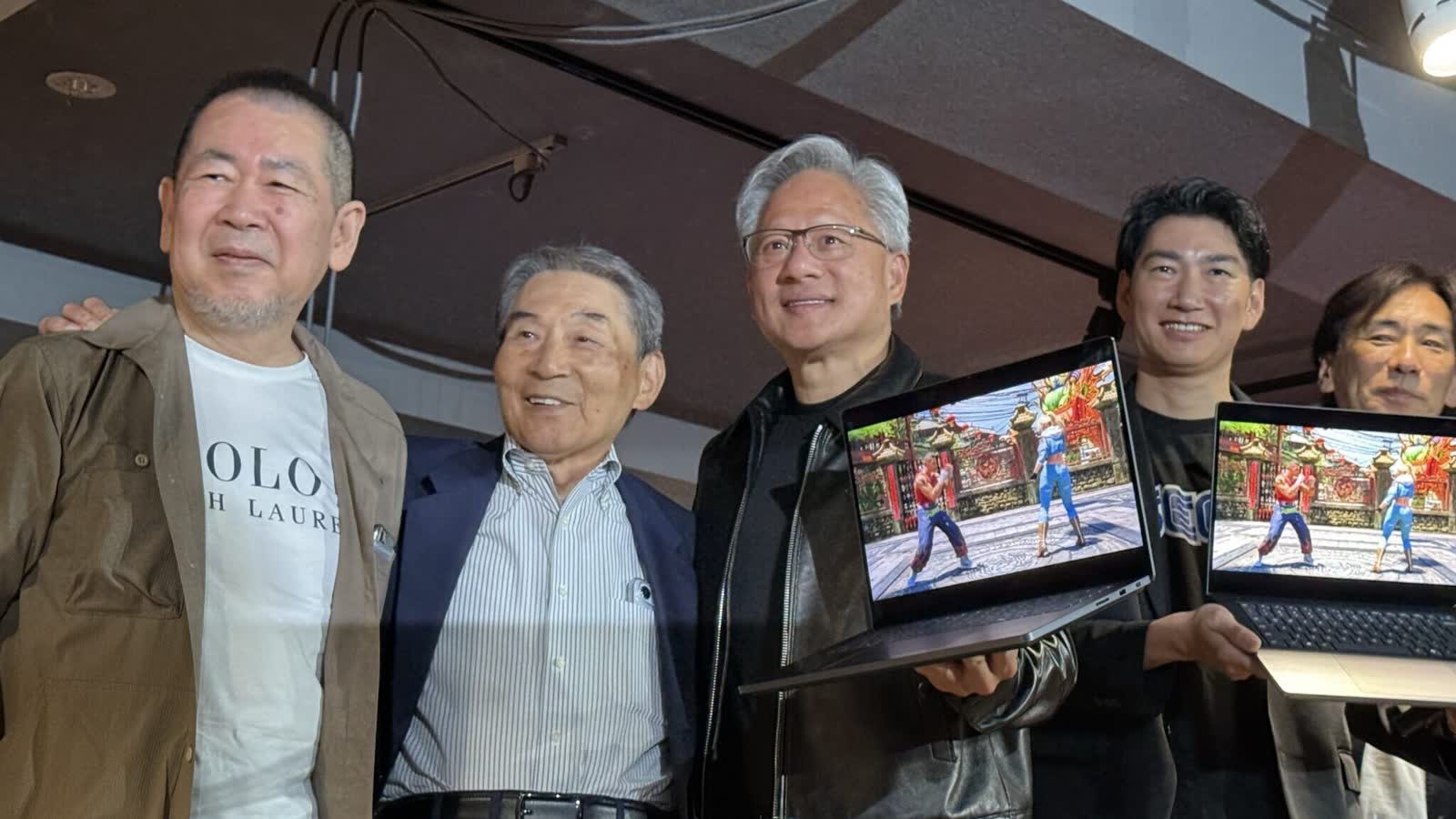
Sega will support Nvidia's RTX Spark platform beginning with Virtua Fighter Crossroads in 2027, according to reporting around the companies' partnership announcement. Future Sega titles are expected to follow. Publisher support is how a developer box starts to look like a gaming PC.
RTX Spark is Nvidia's compact Windows-on-Arm system built around the GB10 Superchip. Nvidia markets it for AI development and as a small desktop platform. Neither company spelled out what "support" means in practice.
Native Arm builds, better path tracing options, or DLSS-class upscaling would all be meaningful. Emulation-friendly packaging would be a weaker form of support. The difference matters for frame time and power draw on a small chassis.
Virtua Fighter Crossroads is a useful flagship for the deal. Fighting games are sensitive to input latency and stable frame rates. If Spark support is real, it has to clear a higher bar than a logo on a trailer. If it is mostly stagecraft, players will notice on day one.
For Nvidia, the partnership says Spark is not only for CUDA notebooks and model experiments. For Sega, it shows PC strategy breadth beyond traditional x86 boxes. Both sides get a story. Players get a 2027 checkpoint.
Input devices, multi-monitor quirks, and anti-cheat stacks have all tripped up Arm Windows efforts before. Publisher commitments help. Certification work is where ports die quietly. One partner does not make a platform.
If you care about RTX Spark as a desk or living-room machine, wait for technical detail on Sega's titles. A keynote slide is not a native build with tuned graphics options. Compare ordinary mini PCs and consoles on price, thermals, and compatibility until the evidence is better.
Studios take on another build, another QA matrix, and another place for anti-cheat vendors to lag when they target Arm Windows. Sega saying yes publicly may make that cost feel strategic. Smaller teams will wait and see.
Put a calendar reminder for 2027 and re-read the technical notes then. A logo either becomes a native build with verified performance targets or remains a keynote souvenir. Until that evidence exists, treat Spark gaming as promised, not proven.
Builders shopping small form factor PCs should still compare Spark against ordinary mini PCs on price and game compatibility. The AI hardware is a different value proposition. Gaming support has to stand on its own.
A short list of 2027 and 2028 titles with clear Arm binaries would matter more than one keynote partner. Until then, treat the Sega deal as intent, not proof that Spark is a living-room machine.